
Self-awareness is not a soft skill; it may be a crucial patient safety skill.
What happens when we don't know what is happening inside us?
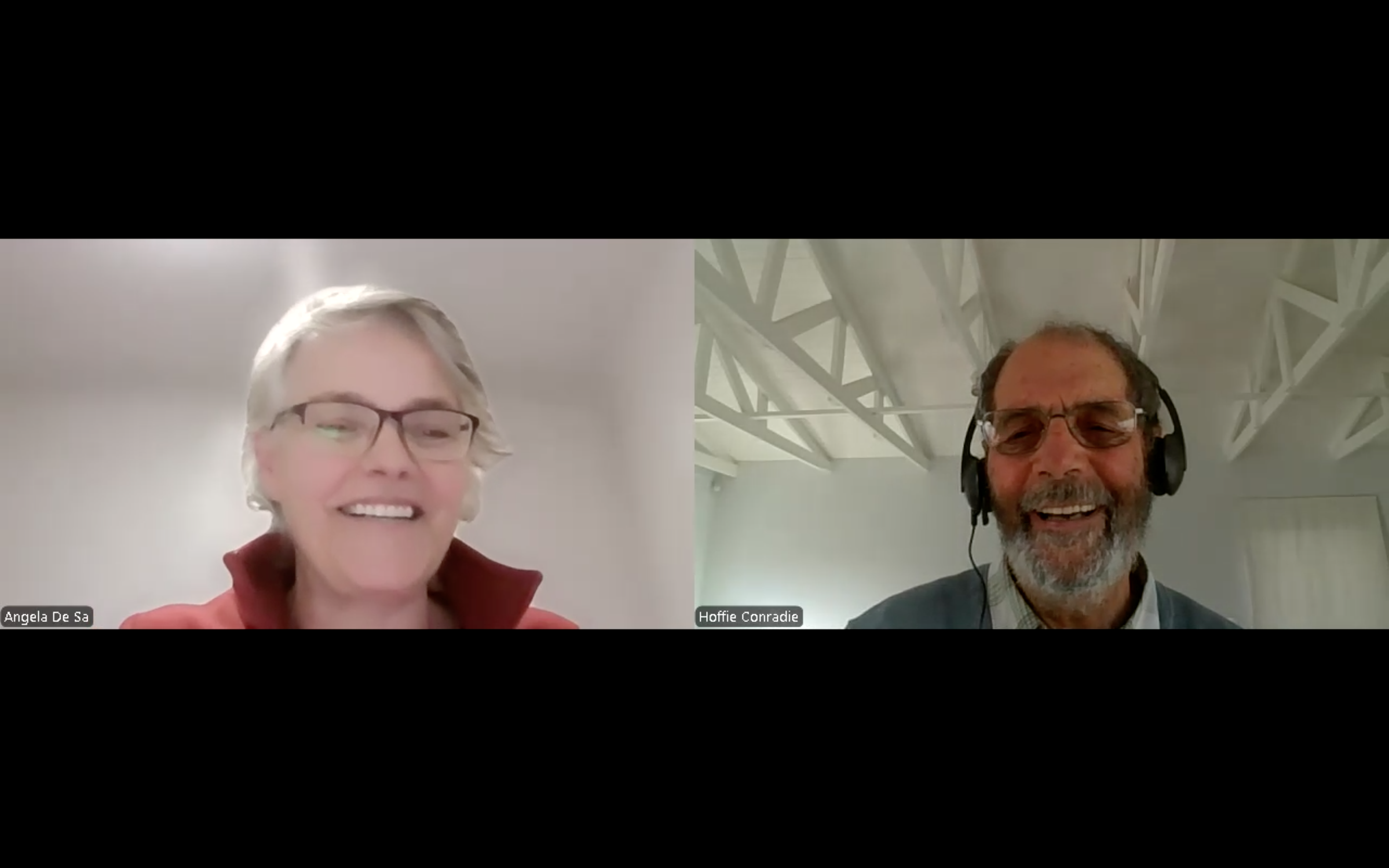
I recently had two conversations with fellow family physician and Integral coach Dr Angela de Sá about burnout, empathy, compassion and patient safety.
We covered a lot of ground. But one idea kept drawing me back:
Self-awareness may be one of the most important professional skills we can develop as healthcare workers.
Not because it can make us calmer, more resilient or better at self-care; but because it helps us notice what is happening in ourselves before it starts shaping what happens between us and our patients.
What are we bringing into the consultation?
Angela describes self-awareness as more than simply knowing our strengths and weaknesses. It involves understanding the personal narratives we carry about ourselves, other people and the world, and how these shape the way we respond. Importantly, she says, it means deliberately looking for our blind spots, including the things we don't yet know about ourselves.
That matters because healthcare is full of situations that can press our buttons:
A patient who is angry after waiting for hours.
A colleague whose communication style frustrates us.
A patient’s family member who challenges our clinical decisions.
A patient who repeatedly doesn't follow the advice we've given them.
A clinic that is understaffed and running late.
In those moments, our response isn't determined only by what is happening in front of us. It is also shaped by what is happening inside us.
Angela gave the example of being confronted by an understandably angry patient after working through the night. The patient's frustration can feel like a personal attack, particularly when it clashes with our own identity as a “good, caring person”.
Without awareness, we react. With awareness, there is at least the possibility of pausing.
I'm tired. I'm frustrated. I'm feeling attacked. This patient has been waiting for six hours. What is mine here, and what belongs to them?
That pause can completely change the interaction and even the relationship.
The boundary between empathy and enmeshment
This becomes particularly important when we think about empathy. Many healthcare professionals are drawn to medicine precisely because they care deeply about other people. But that capacity can also make boundaries difficult.
Angela described how naturally empathic people can struggle to distinguish between helping and creating dependency. If we become too emotionally enmeshed with another person's experience, we can start taking responsibility for something that ultimately belongs to them.
We discussed the difference between recognising a patient's emotions and becoming caught up in them.
For me, the distinction is not about becoming detached. It is about being able to say:
I can see what you are experiencing. I can be alongside you in this. And I can still remain aware of what is happening in me.
Angela put it particularly clearly: “I think it's actually incredibly important that when one goes into this kind of work, that we really focus on developing self-awareness. And in developing that self-awareness, what we become much more aware of is when we are likely to cross that boundary between empathy and enmeshment.”
That boundary isn't only about protecting the healthcare worker. It can also protect the patient. If I continually rescue and fix, I may unintentionally communicate to the patient that their wellbeing depends on me.
As Angela said, “If I'm constantly overcompensating, I am disempowering the patient from being able to look after themselves as well.”
That is a subtle shift. The intention is care. The outcome may be dependency.
And this is where burnout enters the picture
We often talk about burnout as though the answer lies primarily in becoming more resilient. But Angela's perspective is more complex. There are individual vulnerabilities, certainly. But there are also relationships, workplace cultures, systems and the conditions in which healthcare workers are expected to function. When those conditions repeatedly push us into a state of threat or self-preservation, our capacity to respond with curiosity and compassion changes.
Angela described it this way:
“This concept of compassion fatigue is interesting, it's like I can only be in the trenches with you for so long, and then I have to escape for my own preservation.”
I found that reframing helpful. Perhaps compassion fatigue isn't always evidence that someone has stopped caring. Sometimes it may be evidence that they have been caring beyond their capacity for too long. Self-awareness gives us a way of noticing that earlier.
How much capacity do I actually have today? What am I taking responsibility for that isn't mine? What am I feeling in my body? What am I telling myself about what a “good doctor” should be able to cope with? Am I still responding to this patient, or am I reacting from exhaustion?
These are not merely wellbeing questions. They can affect how we communicate, how we make decisions, how we work with colleagues and how safely we care for patients.
So should addressing our self-awareness be optional?
This is where Angela was particularly emphatic.
“I think when you're going into this kind of career, where your life's work is really about trying to understand where your patient is coming from, you need to develop a certain amount of self-awareness to be effective, and a certain amount of self-regulation and ability to manage yourself in difficult situations. Then I don't know that I would agree ethically that it's okay to kind of leave it up to our choice. I think it's something that we should build into our undergraduate and postgraduate courses, and it should be a non-negotiable, you know, but to be done skillfully and in a safe space.”
I think this raises an uncomfortable question for healthcare education. We teach clinicians how to recognise pathology in others. We teach them how to interpret physical signs, take histories, make diagnoses and manage risk. But how much structured attention do we give them to recognising what is happening inside themselves?
The frustration. The resentment. The need to be needed. The impulse to fix. The fear of being perceived as inadequate. The exhaustion that makes another patient's distress feel like one demand too many.
These things don't disappear because we don't talk about them; they simply operate outside our awareness.
Self-awareness is not a solitary exercise
The other important point Angela made is that self-awareness isn't something we simply achieve by reading a book or completing a course. It is an ongoing process, and one of the most powerful ways of developing it is through other people.
Angela remembers encountering Balint groups during her final year of medical school, where doctors discussed their interactions with patients:
“It was patently clear I wasn't the only person that was struggling. Everyone was. You see yourself totally differently when that's the case.”
That matters. Because there is something powerful about discovering that the difficult consultation, the uncomfortable emotion or the uncertainty you've been carrying isn't uniquely yours. We become more able to look at ourselves when there is somewhere safe to do so.
Angela believes this needs to happen through a combination of individual and group processes, with experienced practitioners modelling the kind of openness and reflection they want others to develop. And those spaces need to be protected. If reflective time is the first thing cancelled whenever the clinical workload increases, we are sending a fairly clear message about its value.
As Angela put it:
“If we're going to cancel it at a whim, every time something wobbles a little bit, well then we're creating and perpetuating the message that our needs are far, far less than the needs of others.”
Caring for ourselves is what allows us to care better for our patients.
Perhaps the question isn't how much we care
I came away from these conversations thinking differently about the relationship between self-awareness, burnout and compassion.
The answer isn't to care less. Nor is it simply to become better at enduring difficult circumstances. It may be to become sufficiently aware of ourselves that we can recognise how we are caring, what is driving that care, where our boundaries are, and when we have moved from being alongside someone to carrying something that isn't ours to carry.
And that has implications beyond our own wellbeing. Because if our internal state influences our relationships, and our relationships influence how we communicate and work together, then self-awareness isn't only about the individual healthcare worker.
It is part of the wider ecology of safe, sustainable care. Perhaps that is why I keep coming back to Angela's description of self-awareness as something that should be almost non-negotiable. Not because healthcare workers need another competency to master. But because knowing ourselves may be a crucial part of knowing how to care for others.